

Bringing a new cat home is an exciting time, but it can also feel overwhelming for both the cat and the family. Cats are naturally territorial animals, which means they need time and patience to adjust to unfamiliar surroundings. Without proper planning, a new cat may become stressed, hide for days, or develop behavioral problems that could last for months.

The key to successfully introducing a new cat to your home is creating a safe, quiet space and allowing for gradual adjustment over several weeks. Most experts recommend following the 3-3-3 rule: expect three days for initial decompression, three weeks for basic adjustment, and three months for complete settling. This timeline helps set realistic expectations and prevents owners from rushing the process.
The introduction process becomes even more important when other pets already live in the home. Poor introductions can lead to long-term conflict between animals and create ongoing stress for everyone in the household. With the right approach, however, most cats can successfully adapt to their new environment and become happy, comfortable family members.
Key Takeaways
- Create a quiet, separate room with all essentials before bringing your new cat home
- Allow at least 2-4 weeks for your cat to fully adjust using gradual introduction methods
- Monitor your cat’s health and behavior closely during the first few months for signs of stress or illness
Preparing Your Home for a New Cat
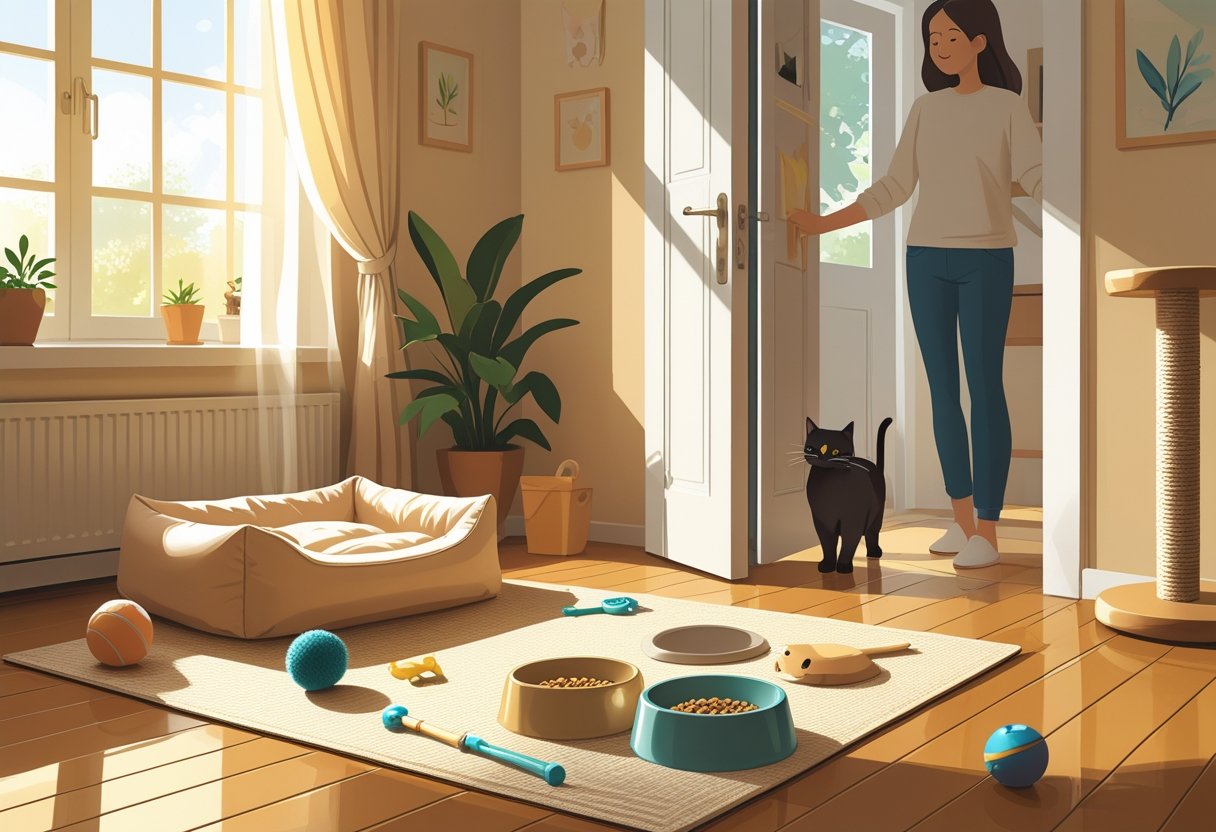
Setting up a safe room and removing hazards helps cats adjust to their new environment. Having the right supplies ready makes the first few days smoother for both cat and owner.
Choosing the Right Space
A quiet room away from household traffic works best for a new cat’s first space. This room should be small enough that the cat feels secure but large enough for food, water, litter box, and sleeping areas.
Bedrooms or spare rooms make ideal choices because they have fewer distractions. The room needs a door that closes completely to keep the cat contained during the adjustment period.
Avoid basements or garages since these spaces often feel cold and isolated. Bathrooms work only if they’re large enough for all supplies with space to move around.
The room should have natural light from a window if possible. Cats like to observe their surroundings, and a window view helps them feel less trapped.
Keep other pets and children away from this space for the first week. The new cat needs time to explore without feeling threatened or overwhelmed.
Cat-Proofing Your Home
Remove small objects that cats might swallow, such as rubber bands, hair ties, and jewelry. These items can cause serious health problems if eaten.
Secure loose wires and cords by taping them down or using cord protectors. Many cats chew on electrical cords, which can lead to burns or electric shock.
Check for toxic plants and remove them from the cat’s room and other areas they’ll access later. Common dangerous plants include:
- Lilies (all types)
- Azaleas
- Tulips
- Daffodils
- Sago palms
Close off hiding spots that are too small or dangerous, like behind appliances or under furniture with sharp edges. Cats often hide when stressed, but they need safe spaces to do this.
Remove breakable items from shelves and surfaces the cat might jump on. Cats explore by climbing, so anything fragile should be stored safely.
Setting Up Essential Supplies
Place the litter box in a corner away from food and water dishes. Use unscented, clumping litter since most cats prefer this type.
Food and water dishes should be ceramic or stainless steel rather than plastic. Place them on opposite sides of the room from the litter box.
Set up a comfortable sleeping area with a soft bed or blanket. Many cats prefer elevated spots, so a cat tree or shelf works well.
Essential supply checklist:
- Litter box and scoop
- Cat litter (unscented)
- Food and water bowls
- Cat food (same brand the cat was eating before)
- Cat bed or blankets
- Scratching post
- A few toys (balls, feather wand)
Add hiding spots like cardboard boxes or cat tunnels. Stressed cats need places where they feel completely hidden and safe.
Keep cleaning supplies nearby for accidents. Enzyme-based cleaners work best for removing odors that might cause repeat incidents.
Selecting the Ideal Cat for Your Environment
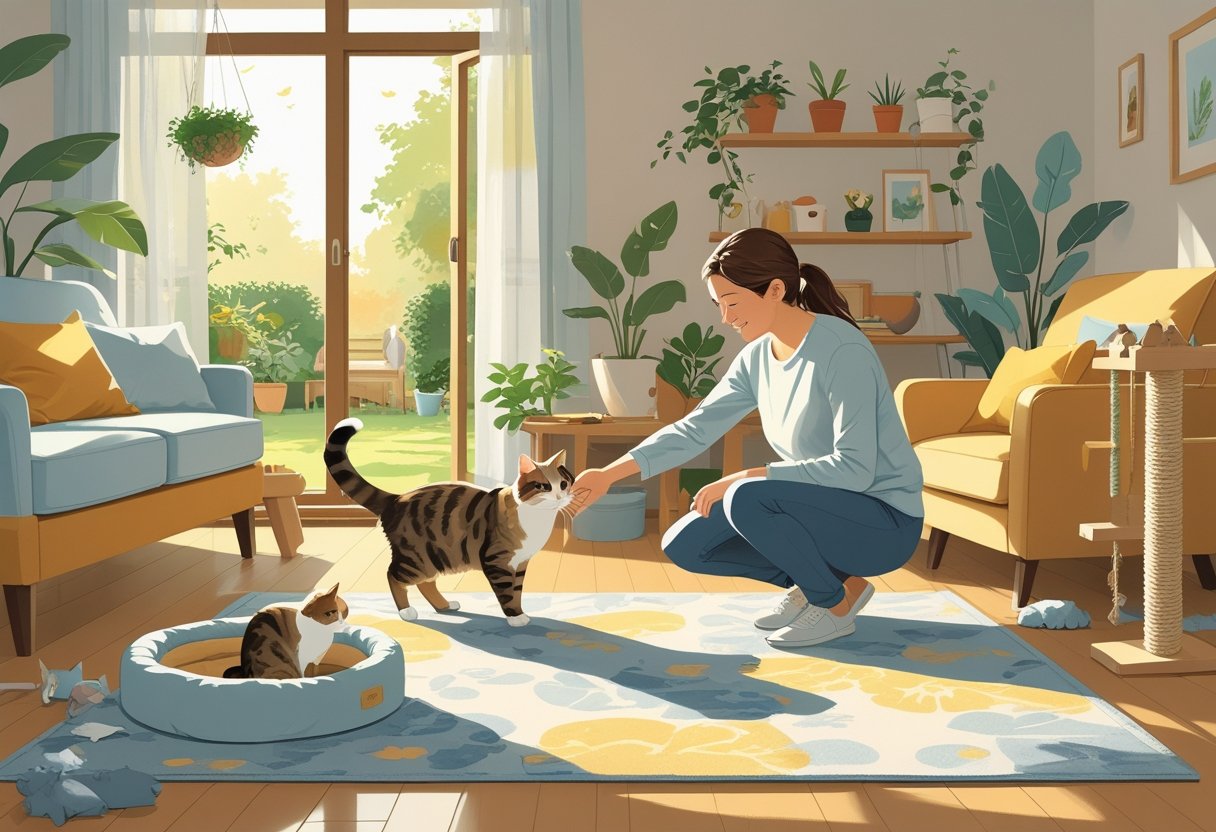
Choosing the right cat depends on your current pets and family situation. Age differences and personality traits play major roles in how well cats will get along together.
Assessing Household Dynamics
Single-cat households need different considerations than multi-cat homes. Some cats prefer being the only pet and may struggle with companions.
Current pet personalities matter most. A confident, social cat often welcomes new friends. Shy or territorial cats may need a calmer companion.
Children in the home should influence your choice. Young kids do better with patient, gentle cats rather than skittish ones.
Daily schedules affect integration success. Busy households with lots of activity suit outgoing cats. Quiet homes work better for nervous or older cats.
Available space determines comfort levels. Small apartments limit territory, which can increase stress between cats. Larger homes give cats room to avoid each other when needed.
Considering Age and Temperament
Kitten-to-adult ratios impact harmony. Adult cats often tolerate kittens better than other adults. Two kittens together usually bond quickly.
Energy levels should match somewhat. A playful young cat might annoy a senior cat who prefers quiet naps.
Temperament matching works differently than expected. Two shy cats may hide together. One confident cat can help a timid one feel secure.
Gender combinations affect relationships. Male-female pairs often get along best. Same-gender pairs need more careful personality matching to succeed.
Bringing Your New Cat Home

The car ride home and first 24 hours set the tone for your cat’s adjustment period. Proper transport methods, careful first-day choices, and smart scent management create the foundation for a smooth transition.
Transporting Safely
A secure carrier protects both the cat and passengers during transport. Choose a hard-sided carrier that allows the cat to stand and turn around comfortably.
Place a familiar-smelling towel or blanket inside the carrier. This provides comfort and absorbs any accidents during the trip.
Essential carrier setup:
- Non-slip mat on the bottom
- Absorbent towel or blanket
- Small water dish for trips over 2 hours
- Secure latching mechanism
Keep the carrier level and stable in the car. Place it on the floor behind a seat or secure it with a seatbelt on the seat.
Avoid opening the carrier during transport. Even calm cats may panic and try to escape in a moving vehicle.
Play soft music or keep the radio low. Loud noises can increase stress levels during an already overwhelming experience.
First Day Do’s and Don’ts
Start with a single room setup before allowing house exploration. This prevents the cat from becoming overwhelmed by too much space.
Do these things:
- Set up food, water, and litter box in the safe room
- Keep voices low and movements slow
- Allow the cat to hide under furniture if needed
- Sit quietly in the room for short periods
Avoid these mistakes:
- Forcing interaction or petting
- Introducing other pets immediately
- Playing loud music or TV
- Having multiple people visit the cat
Give the cat 24-48 hours to settle before expanding their territory. Some cats adjust quickly while others need several days.
Check food and water consumption after a few hours. Eating and drinking indicate the cat is beginning to feel secure.
Managing Scent Introduction
Cats rely heavily on scent to understand their environment. Proper scent introduction reduces anxiety and helps them feel at home faster.
Rub a clean cloth on the cat’s cheeks and chin to collect their scent. Place these cloths around the house in areas where the cat will eventually spend time.
Scent exchange steps:
- Collect the new cat’s scent on a cloth
- Let existing pets smell the cloth
- Rub furniture legs with the scent cloth
- Place familiar items in the cat’s room
Avoid using air fresheners or strong cleaning products during the first week. These artificial scents can mask important environmental cues.
Feed the new cat near the door of their safe room. This creates positive associations with scents from other areas of the house.
Exchange bedding between the new cat and existing pets after 2-3 days. This gradual scent mixing prepares everyone for eventual face-to-face meetings.
Establishing a Safe Space

Creating a designated area helps new cats feel secure and reduces stress during their transition. This space should include all essential resources positioned strategically for maximum comfort and safety.
Creating a Sanctuary Room
Choose a quiet room away from high-traffic areas like bedrooms or bathrooms. The space should be large enough for the cat to move around but small enough to feel secure.
Remove any potential hazards such as toxic plants, small objects, or breakable items. Ensure windows are secure and cannot be opened accidentally.
Essential items for the sanctuary room:
- Comfortable bed or blanket
- Scratching post or cardboard scratcher
- A few safe toys
- Hiding spots like cardboard boxes or cat caves
The room temperature should stay between 65-75°F. Provide adequate lighting during the day but ensure the cat can find darker areas to rest.
Keep the door closed initially. This prevents the new cat from becoming overwhelmed by exploring the entire house too quickly.
Introducing Food and Water Stations
Place food and water bowls at least 3-4 feet apart. Cats prefer their water source separated from their food for cleanliness reasons.
Use shallow, wide bowls made of stainless steel or ceramic. Plastic bowls can harbor bacteria and cause chin acne in some cats.
Feeding station setup:
- Food bowl in one corner
- Water bowl in opposite corner
- Non-slip mats underneath both bowls
- Extra water bowl if the room is large
Fill water bowls daily with fresh water. Some cats prefer running water, so consider a small fountain if the cat seems reluctant to drink.
Feed the new cat their usual food to avoid digestive upset. Place food away from the litter area to maintain hygiene.
Litter Box Placement
Position the litter box in a corner opposite from food and water stations. Cats naturally avoid eliminating near their eating areas.
Choose an uncovered box initially, as some cats feel trapped in covered boxes in unfamiliar spaces. The box should be large enough for the cat to turn around comfortably.
Use the same type of litter the cat used previously. Sudden changes in litter texture or scent can cause elimination problems.
Litter box requirements:
- 1.5 times the cat’s body length
- 2-3 inches of litter depth
- Easy entry and exit access
- Located away from noisy appliances
Clean the box daily but leave a small amount of used litter initially. The familiar scent helps the cat recognize their bathroom area.
Ensure the cat can access the box without walking past their food or through areas that feel exposed.
Frequently Asked Questions About Introducing a New Cat
Q: How long does it take for a new cat to adjust to a new home?
A: Most cats follow the 3-3-3 rule: three days for initial decompression, three weeks for basic adjustment, and three months for complete settling. However, individual cats vary – some adjust within a week while shy or traumatized cats may need several months to feel fully comfortable.
Q: Should I let my new cat roam the entire house immediately?
A: No, start with a single room for at least 3-7 days before gradually expanding access. Giving a new cat too much space too quickly can overwhelm them and make adjustment more difficult. Let the cat set the pace for exploring additional areas.
Q: Is it normal for my new cat to hide for days?
A: Yes, hiding is a completely normal stress response for cats in new environments. Some cats hide for 2-3 days, while others may take a week or more. Provide hiding spots, maintain a quiet environment, and let the cat emerge on their own schedule without forcing interaction.
Q: Can I introduce my new cat to my existing pets right away?
A: No, immediate introductions often lead to long-term conflict. Start with scent exchanges through closed doors for several days, then progress to visual contact through baby gates or cracked doors. Full face-to-face introductions should wait until both cats show calm, curious behavior during visual contact.
Q: What if my new cat won’t eat or use the litter box?
A: Not eating for the first 12-24 hours is common due to stress, but contact your veterinarian if the cat doesn’t eat within 24 hours. For litter box issues, ensure it’s clean, accessible, and uses familiar litter. Place the cat in the box after meals and naps to encourage use.
Q: How do I know if my cat is adjusting well?
A: Signs of good adjustment include regular eating and drinking, using the litter box consistently, exploring their space, showing curiosity about sounds outside their room, grooming themselves, and eventually seeking interaction with you. These behaviors indicate decreasing stress levels.
Q: Should I adopt two cats at once or introduce them separately?
A: Adopting bonded pairs or siblings together is often easier than introducing cats separately, as they already have an established relationship. However, if you have an existing cat, introducing one new cat at a time prevents overwhelming everyone and allows for controlled introductions.
Q: What mistakes should I avoid when bringing a new cat home?
A: Common mistakes include forcing interaction too soon, allowing too much space immediately, introducing other pets without proper preparation, having too many visitors, using punishment for scared behavior, and rushing the adjustment timeline. Patience and gradual progression prevent most problems.
- “Traveling with Cats: Tips for Stress-Free Trips”
- “15 Funniest Cat Behaviors Explained”
- “The Maine Coon: Giant Gentle Cats Everyone Loves”
- “How to Tell if Your Cat is Overweight (and What to Do)”
Keywords: introduce new cat, bringing cat home, new cat adjustment, cat introduction process, introducing cats to each other, new cat safe room, cat settling in period, preparing for new cat, cat transition tips, introducing kitten to home, multi-cat household introduction, cat territorial behavior