

Many cat owners brush their own teeth twice daily but never think about their pet’s dental health. Cats develop the same dental problems as humans, including plaque buildup, gum disease, and tooth pain that can affect their ability to eat and enjoy life.

Poor dental health in cats can lead to serious health problems beyond the mouth, including heart and kidney disease when bacteria enters the bloodstream. The good news is that starting a dental care routine for your cat doesn’t have to be difficult or stressful for either of you.
Most cats will accept dental care when introduced gradually and with patience. Simple steps like choosing the right toothbrush, using cat-safe toothpaste, and knowing when professional cleaning is needed can prevent years of pain and expensive dental procedures.
Key Takeaways
- Regular dental care prevents serious health problems and keeps cats comfortable while eating
- Warning signs like bad breath, yellow teeth, or difficulty eating indicate dental issues that need attention
- Starting with gentle touches around the mouth and gradually introducing brushing makes dental care easier for cats to accept
The Importance of Cat Dental Care
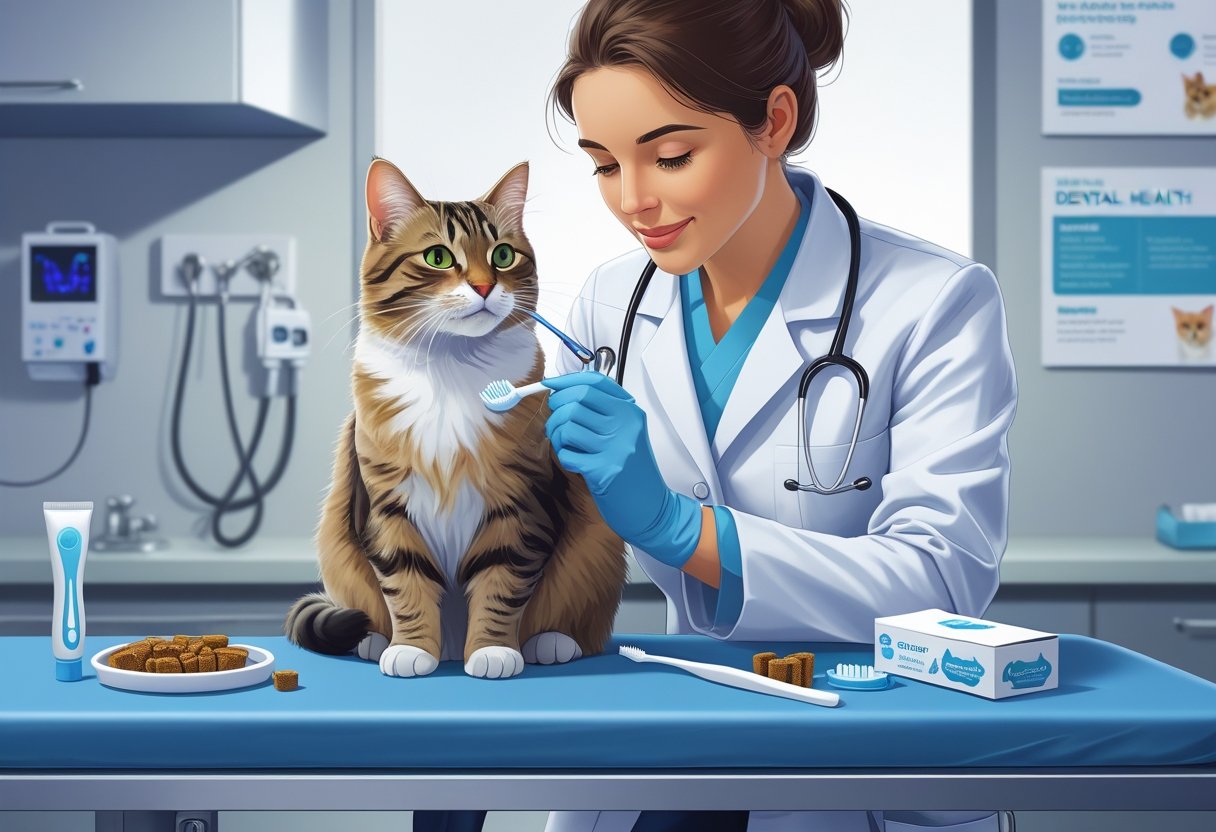
Poor dental hygiene causes painful gum disease, tooth loss, and infections that can spread to vital organs like the heart and kidneys. Cats naturally hide dental pain, making early detection difficult without regular oral health monitoring.
Common Dental Problems in Cats
Periodontal disease affects over 70% of cats by age three. This condition starts when plaque builds up along the gum line and hardens into tartar.
The bacteria in plaque irritate the gums, causing gingivitis. Red, swollen gums that bleed easily are early warning signs.
Tooth resorption occurs when the tooth structure breaks down from the inside. This painful condition affects nearly half of all cats over five years old.
Fractured teeth can happen from chewing hard objects or trauma. Broken teeth expose nerves and create openings for bacteria.
Stomatitis causes severe mouth inflammation and ulcers. Cats with this condition often stop eating due to extreme pain.
Dental abscesses form when bacteria infect the tooth root. These pockets of pus cause facial swelling and intense discomfort.
How Oral Health Impacts Overall Well-Being
Bacteria from dental disease enter the bloodstream through inflamed gums. This process allows harmful microorganisms to travel throughout the body.
Heart problems can develop when oral bacteria attach to heart valves. The infection damages cardiac tissue and reduces heart function.
Kidney damage occurs as these organs filter toxins from infected gums. Chronic kidney disease becomes more likely with untreated dental issues.
Liver complications arise when this organ processes bacterial toxins. Long-term exposure can lead to liver inflammation and scarring.
Pain from dental problems affects eating habits and nutrition. Cats may lose weight or develop digestive issues from swallowing bacteria.
Chronic mouth pain also changes behavior. Cats become less active, hide more often, and show reduced interest in play or social interaction.
Risks of Neglecting Dental Health
Untreated dental disease progresses rapidly in cats. What starts as mild plaque buildup can advance to severe periodontal disease within months.
Tooth loss becomes inevitable as gum disease destroys supporting structures. Cats may lose multiple teeth, making eating difficult.
Jaw bone damage occurs in advanced cases. The infection can actually dissolve bone tissue around tooth roots.
Systemic infections develop when mouth bacteria spread through the bloodstream. These whole-body infections can become life-threatening.
Pain levels increase dramatically as dental problems worsen. Cats suffer in silence, often for years before owners notice obvious symptoms.
Treatment costs rise significantly with advanced dental disease. Simple cleanings cost much less than tooth extractions or treating organ damage.
Emergency situations may arise from dental abscesses or severe infections. These urgent cases require immediate veterinary intervention and costly procedures.
Recognizing Signs of Dental Issues
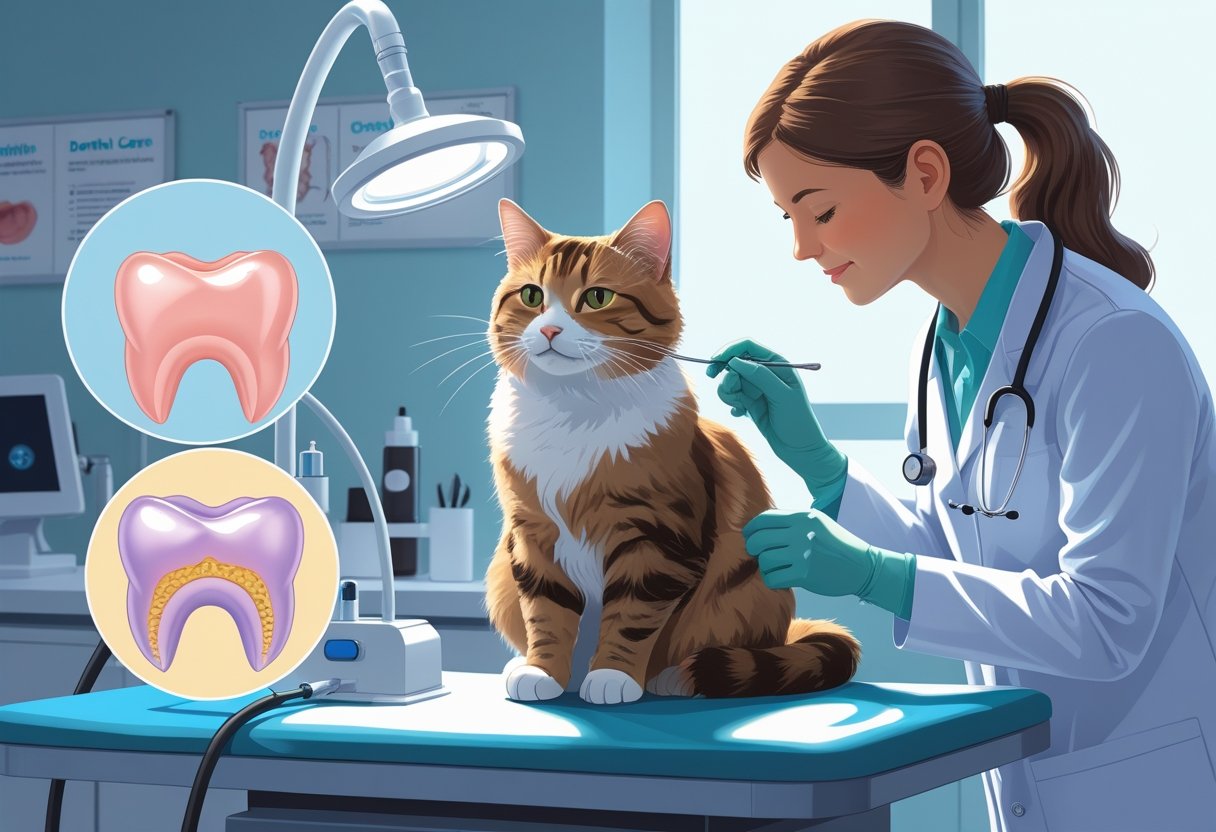
Most cats over age 3 develop some form of dental disease. Cat owners can spot problems early by watching for specific physical symptoms and changes in eating behavior.
Physical Symptoms to Watch For
Bad breath is often the first sign of dental problems in cats. Healthy cats should not have strong, unpleasant mouth odors.
Red or swollen gums indicate inflammation called gingivitis. The gums may appear bright red along the tooth line instead of their normal pink color.
Yellow or brown tartar buildup creates a crusty layer on the teeth. This hard substance forms when plaque hardens and can only be removed by a veterinarian.
Visible tooth damage includes:
- Broken or chipped teeth
- Loose teeth that move when touched
- Missing teeth with no known cause
Excessive drooling that seems unusual for the cat may signal mouth pain. Some cats naturally drool more than others, so owners should watch for changes.
Bleeding from the mouth can occur when cats eat or chew. Small amounts of blood on food bowls or toys indicate gum disease.
Behavioral Indicators of Oral Pain
Cats hide pain well, but dental problems cause noticeable eating changes. Difficulty chewing shows up when cats drop food from their mouths repeatedly or chew only on one side.
Pawing at the face or mouth suggests discomfort. Cats may scratch at their face more often or rub their mouth against objects.
Changes in appetite happen when eating becomes painful. Some cats eat less food overall, while others switch to eating only soft foods and avoid hard kibble.
Head tilting while eating occurs when cats favor one side of their mouth. They may turn their head to use teeth that don’t hurt.
Avoiding hard toys or treats shows that chewing causes pain. Cats may ignore items they previously enjoyed.
When to Seek Veterinary Advice
Schedule a vet visit within one week if cats show multiple dental symptoms together. Early treatment prevents more serious problems.
Seek immediate care for these urgent signs:
- Inability to eat or drink
- Severe facial swelling
- Heavy bleeding from the mouth
- Signs of extreme pain like hiding or aggression
Annual dental checkups help catch problems before symptoms appear. Cats over age 7 should have dental exams twice yearly.
Contact a veterinarian if behavioral changes last more than 2-3 days. Cats may need professional dental cleaning or tooth extractions to resolve pain.
How to Start a Cat Dental Care Routine
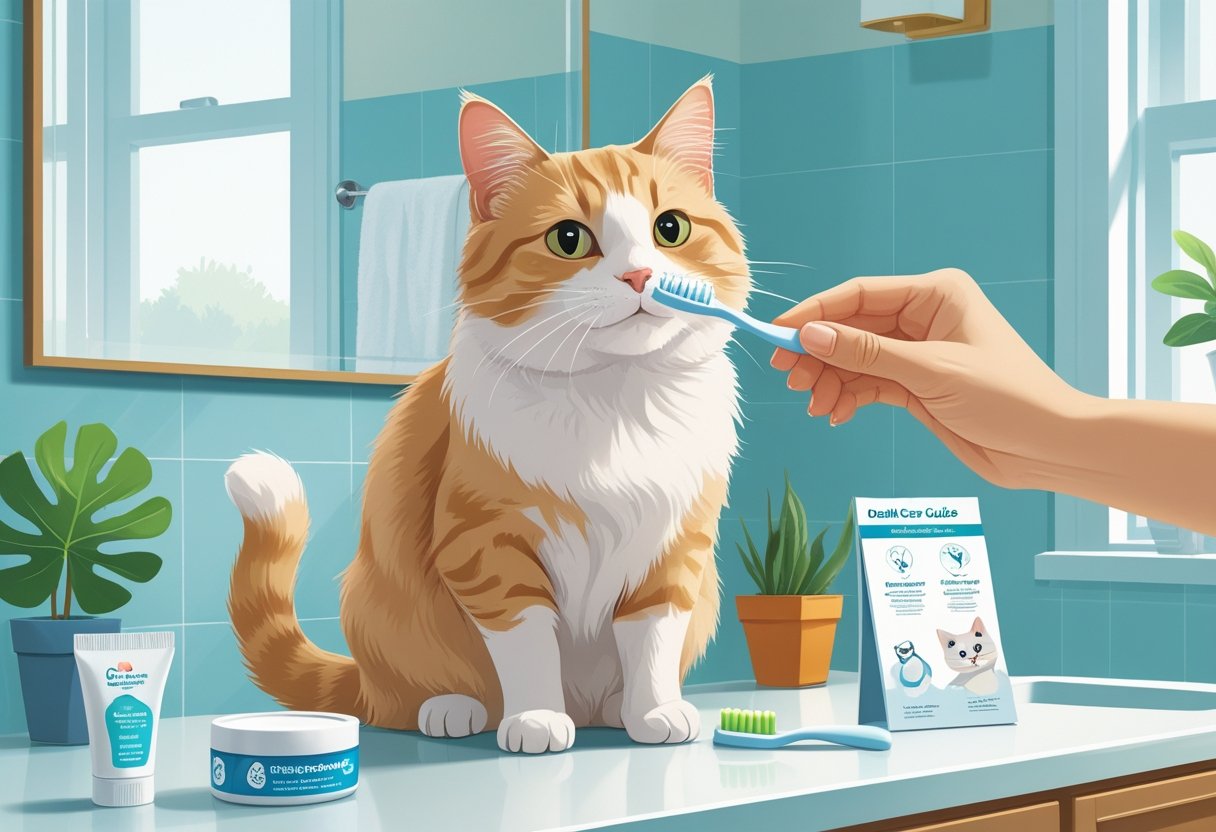
Starting a dental care routine requires patience and the right approach. Success depends on gradual introduction of toothbrushing, selecting proper dental products, and maintaining a regular schedule that works for both cat and owner.
Introducing Toothbrushing to Your Cat
The key to successful cat dental care is starting slowly. Begin by letting the cat sniff and explore a pet toothbrush or finger brush for several days.
Next, add a small amount of cat-safe toothpaste to the brush. Let the cat lick it off to get familiar with the taste. Most cats prefer poultry or seafood flavors.
Start touching the cat’s lips and gums gently with your finger. Do this for just a few seconds at first. Gradually increase the time as the cat becomes more comfortable.
Once the cat accepts finger touching, introduce the toothbrush. Lift the lip gently and brush just the front teeth for 5-10 seconds. Focus on the outer surfaces where plaque builds up most.
Never use human toothpaste as it contains ingredients that are toxic to cats. Always reward the cat with treats and praise after each session to create positive associations.
Choosing the Right Dental Products
Select a soft-bristled toothbrush designed specifically for cats or use a finger brush for better control. The brush head should be small enough to fit comfortably in the cat’s mouth.
Cat toothpaste comes in flavors cats enjoy, such as chicken, tuna, or malt. These enzymatic toothpastes help break down bacteria and freshen breath without requiring rinsing.
Alternative products include:
- Dental treats that scrape teeth while chewing
- Water additives that reduce bacteria
- Dental wipes for cats who won’t accept brushing
- Dental gels that can be applied directly to teeth
Look for products approved by the Veterinary Oral Health Council. These items meet specific standards for reducing plaque and tartar buildup.
Setting a Consistent Schedule
Daily brushing provides the best results for preventing dental disease. However, brushing 2-3 times per week can still make a significant difference in oral health.
Choose the same time each day when the cat is calm and relaxed. Many owners find success brushing teeth before feeding time when cats are more cooperative.
Start with short sessions of 30 seconds or less. Gradually increase to 1-2 minutes as the cat becomes comfortable with the routine.
Track progress by:
- Noting how long the cat tolerates brushing
- Checking for reduced bad breath
- Watching for pink, healthy gums
If the cat strongly resists brushing after several weeks of gradual introduction, focus on dental treats, water additives, or professional cleanings instead.
Professional Cat Dental Care Options
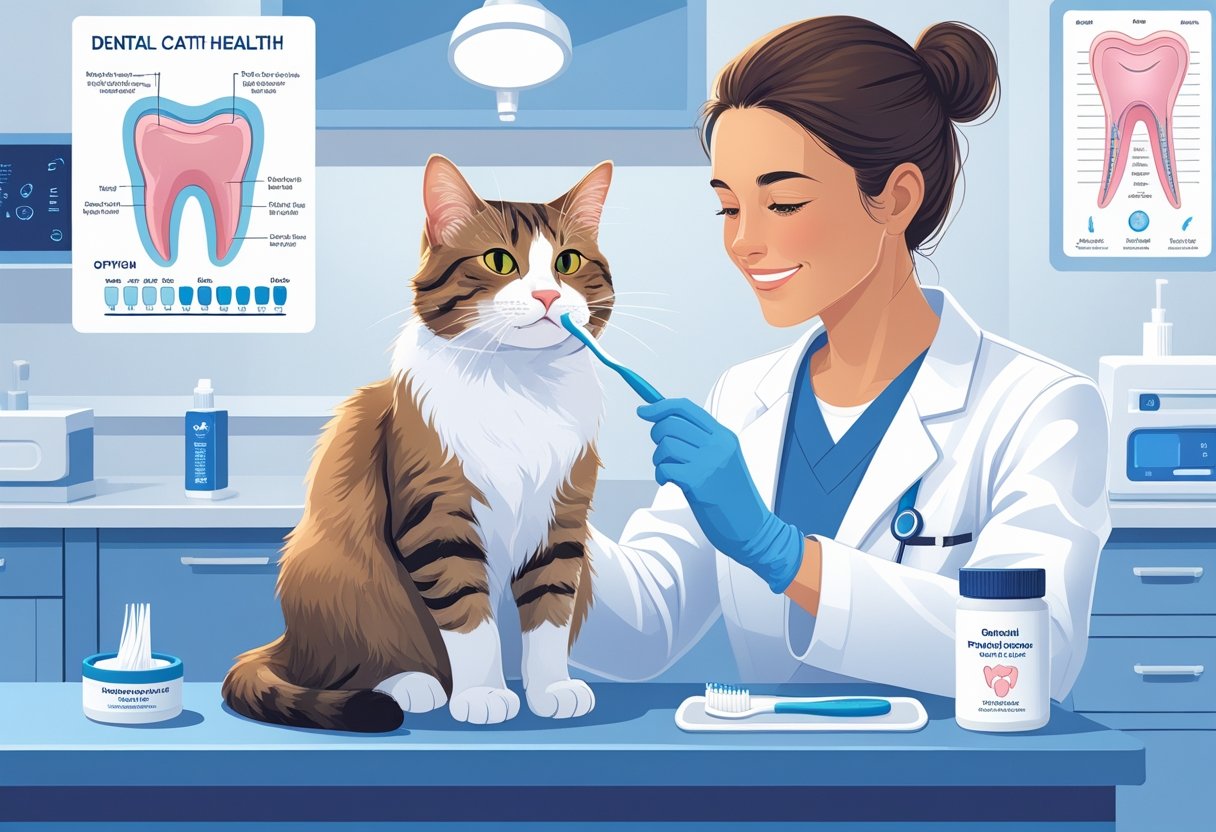
Professional dental care provides thorough cleanings that reach below the gum line where home care cannot. Annual veterinary examinations can catch early signs of dental disease before they become serious problems.
Veterinary Dental Examinations
Veterinary dental exams allow professionals to assess oral health and identify problems early. During these visits, veterinarians check for signs of gingivitis, tartar buildup, and tooth damage.
Most cats should receive dental examinations annually. Senior cats or those with existing dental issues may need more frequent checkups every six months.
What veterinarians look for during exams:
- Plaque and tartar accumulation
- Red or swollen gums
- Loose or broken teeth
- Bad breath or unusual odors
- Pain when touching the mouth area
Veterinarians use specialized tools to examine areas that owners cannot see at home. They can spot early stages of dental disease before symptoms become obvious.
Early detection saves money on treatments later. It also prevents pain and discomfort for cats.
Professional Cleanings and Treatments
Professional dental cleanings remove tartar that brushing at home cannot eliminate. These procedures require general anesthesia to ensure safety and thoroughness.
During cleaning, veterinarians scale teeth above and below the gum line. They polish teeth and may extract damaged teeth if necessary.
The cleaning process includes:
- Pre-anesthetic blood work and examination
- Scaling to remove tartar and plaque
- Polishing to smooth tooth surfaces
- Dental X-rays to check for hidden problems
- Tooth extractions if needed
Most cats need professional cleanings once per year. Cats with severe dental disease may require more frequent treatments initially.
Recovery typically takes 24-48 hours. Cats may need soft food during this period while their gums heal.
Tips for Maintaining Lifelong Oral Health

Building daily habits like brushing and using dental treats helps prevent serious gum disease. The right food and safe toys also play a big role in keeping teeth clean naturally.
Daily and Weekly Maintenance Habits
Brushing remains the most effective way to remove plaque. Start by letting the cat smell and taste pet toothpaste for a few days. Use a finger brush or soft-bristled cat toothbrush.
Begin with short 10-15 second sessions. Focus on the outer surfaces of teeth where plaque builds up most. Gradually increase brushing time as the cat gets comfortable.
Weekly tasks include checking for red or swollen gums. Look for yellow or brown tartar buildup along the gum line. Bad breath that gets worse over time signals problems.
Schedule professional cleanings every 1-2 years. Some cats need them more often if they develop tartar quickly. Senior cats may need cleanings every 6-12 months.
Recommended Diets for Dental Health
Dry kibble helps scrape plaque off teeth during chewing. Choose kibble with larger pieces that require more chewing action. Avoid soft foods as the main diet since they stick to teeth.
Dental-specific foods contain special textures and ingredients. These kibbles are designed to clean teeth mechanically. Some contain enzymes that break down plaque.
| Food Type | Benefit | Best For |
|---|---|---|
| Large kibble | Scrapes teeth | All cats |
| Dental formula | Special cleaning texture | Cats with plaque |
| Raw diet | Natural chewing action | Healthy adult cats |
Water additives can help reduce bacteria in the mouth. Only use products made specifically for cats. Never use human mouthwash or dental products.
Safe Chew Toys and Dental Treats
Approved dental treats carry the VOHC seal of acceptance. These treats meet standards for reducing plaque or tartar. Give them according to package directions to avoid overfeeding.
Safe chew toys include rubber toys designed for cats. Avoid bones, antlers, or hard items that can break teeth. Cat-safe rope toys help remove plaque through chewing action.
Interactive feeding toys make cats work for food. Puzzle feeders and treat balls encourage longer chewing. This extra chewing time helps clean teeth naturally.
Check all toys regularly for wear and damage. Replace broken toys immediately to prevent choking hazards.
Frequently Asked Questions
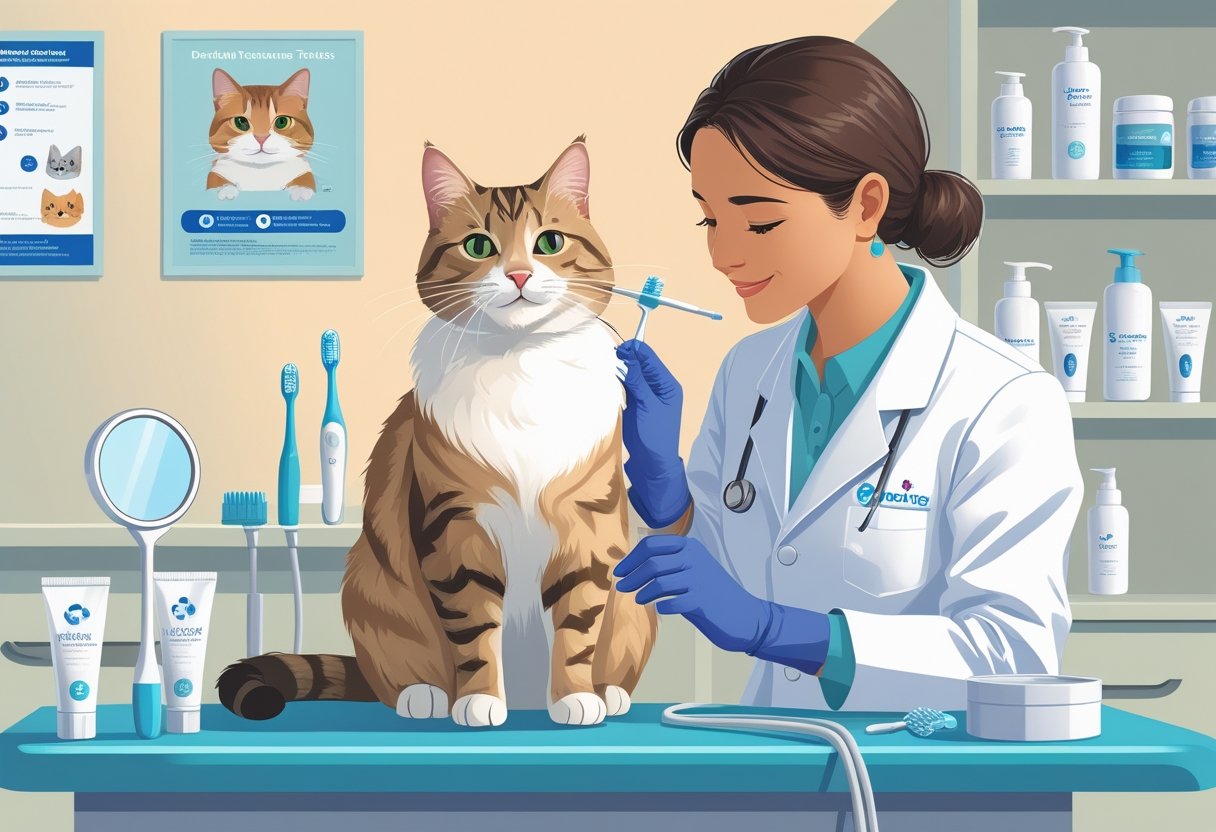
Cat owners often have questions about dental products, cleaning methods, costs, and health signs. These common concerns help pet parents make better choices for their cat’s oral health.
What types of dental care products are available for cats?
Several dental care products help maintain cat oral health. Cat-specific toothbrushes come in different sizes, including finger brushes for easier handling.
Enzymatic toothpaste designed for cats breaks down plaque and bacteria. These pastes come in flavors cats enjoy, like chicken or fish.
Dental treats and chews help reduce tartar buildup through mechanical action. Water additives can freshen breath and reduce bacteria in the mouth.
Dental toys encourage chewing, which naturally cleans teeth. Prescription dental diets have special kibble shapes that scrape teeth during eating.
What are effective ways to maintain a cat’s dental hygiene without brushing?
Dental treats provide mechanical cleaning action when cats chew them. The texture helps scrape away plaque and tartar buildup.
Water additives mix into drinking water to reduce bacteria and freshen breath. These products require no direct handling of the cat.
Prescription dental diets feature specially shaped kibble that cleans teeth during normal eating. The kibble scrapes against teeth as cats chew.
Dental toys encourage natural chewing behaviors that help clean teeth. Some toys can be filled with treats to increase interest.
What benefits do dental treats offer for a cat’s oral health?
Dental treats mechanically scrape plaque from teeth as cats chew them. The abrasive texture helps remove food particles and bacteria.
Many dental treats contain enzymes that break down tartar and plaque. These ingredients continue working after the cat finishes eating.
Regular use of dental treats can reduce bad breath caused by bacteria. The chewing action also stimulates saliva production, which naturally cleanses the mouth.
Some dental treats include ingredients that help control bacteria growth. This reduces the risk of gingivitis and other gum diseases.
How much does a professional dental cleaning typically cost for a cat?
Professional cat dental cleanings usually cost between $300 and $800. The price varies based on location, veterinary clinic, and the cat’s specific needs.
Cats requiring tooth extractions or treating dental disease pay more. Pre-anesthetic blood work and pain medications add to the total cost.
Older cats or those with health issues may need additional monitoring during anesthesia. This increases the overall expense of the procedure.
Many veterinary clinics offer payment plans or pet insurance may cover part of the cost. Pet owners should ask about financial options when scheduling cleanings.
How can I recognize the signs of dental disease in my cat?
Bad breath is often the first sign of dental problems in cats. Healthy cats should not have strong or unpleasant mouth odors.
Yellow or brown tartar buildup appears on teeth, especially near the gum line. Red, swollen, or bleeding gums indicate gingivitis or gum disease.
Cats with dental pain may eat less or drop food while eating. They might favor one side of their mouth or avoid hard foods.
Excessive drooling or pawing at the face suggests mouth discomfort. Some cats become less social or hide when experiencing dental pain.
At what age should a routine for a cat’s dental care be established?
Dental care should begin when cats are kittens, around 3 to 6 months old. Starting early helps cats accept tooth brushing and handling.
Young cats adapt more easily to dental care routines than older cats. Early introduction reduces stress and resistance to dental procedures.
Adult cats can still learn dental care routines with patience and gradual training. The process may take longer but remains beneficial for oral health.
Senior cats especially need regular dental care as they face higher risks of dental disease. Age should not prevent starting a dental care routine.
Frequently Asked Questions About Cat Dental Care
Q: How often should I brush my cat’s teeth?
A: Daily brushing provides the best protection against dental disease, but brushing 2-3 times per week can still significantly reduce plaque buildup and prevent gum disease. Consistency matters more than frequency – choose a schedule you can maintain long-term.
Q: Can I use human toothpaste on my cat?
A: No, never use human toothpaste on cats. Human toothpaste contains fluoride and other ingredients that are toxic to cats if swallowed. Always use toothpaste specifically formulated for cats, which comes in pet-safe flavors they’ll enjoy.
Q: What if my cat absolutely refuses to let me brush their teeth?
A: If your cat won’t tolerate brushing after several weeks of gradual introduction, focus on alternative dental care methods like veterinary-approved dental treats, water additives, dental wipes, or prescription dental diets. Professional cleanings become even more important for cats who won’t accept home care.
Q: Are dental treats as effective as brushing?
A: Dental treats are helpful but not as effective as daily brushing. They provide mechanical cleaning and may contain enzymes that reduce bacteria, but they can’t reach below the gum line or clean all tooth surfaces like brushing does. Use dental treats as a supplement, not a replacement for brushing.
Q: How do I know if my cat needs a professional dental cleaning?
A: Signs that indicate your cat needs professional cleaning include visible tartar buildup (yellow or brown crusty deposits), red or swollen gums, persistent bad breath, difficulty eating, or pawing at the mouth. Your veterinarian can assess during annual exams whether cleaning is needed.
Q: Is anesthesia safe for dental cleanings in older cats?
A: Modern veterinary anesthesia is generally safe for senior cats when proper pre-anesthetic blood work and monitoring are performed. The risks of untreated dental disease often outweigh anesthesia risks. Discuss your concerns with your veterinarian, who can assess your cat’s individual health status.
Q: Can dental problems really affect my cat’s other organs?
A: Yes, bacteria from dental disease can enter the bloodstream through inflamed gums and travel to vital organs including the heart, kidneys, and liver. This can cause serious infections and organ damage, making dental care crucial for overall health, not just oral health.
Q: At what age do cats typically develop dental problems?
A: Over 70% of cats show signs of dental disease by age three. However, dental problems can develop at any age, making it important to start preventive care early and maintain it throughout your cat’s life with regular home care and veterinary checkups.
Related Articles You Might Enjoy:
- “Understanding Cat Body Language: What Your Cat Is Really Telling You”
- “How to Litter Train Your Cat (Even Older Ones)”
- “The Importance of Vet Checkups for Cats”
- “15 Funniest Cat Behaviors Explained”
Keywords: cat dental care, cat teeth cleaning, feline dental health, cat toothbrush, cat dental disease, pet dental hygiene, cat gum disease, cat tooth care, feline oral health, professional cat dental cleaning, cat dental problems, preventing cat dental disease, cat periodontal disease